How Much Alcohol Do You Really Need for Your Event?

Planning the bar for an event can get confusing fast. You want your guests to have a good time, but you also don’t want to spend hundreds of extra dollars on alcohol that never gets opened.
And of course, nobody wants to be the host who runs out of tequila halfway through the party.
The good news is that estimating alcohol doesn’t have to be complicated. With your guest count, event length and a little information about your crowd, you can create a bar plan that makes sense for your celebration and your budget.
Whether you’re planning a wedding, birthday party, corporate event or backyard celebration, here’s a simple guide to help you get started.

Start With the One-Drink-Per-Hour Rule
A good starting point is to plan for approximately one drink per guest for each hour of the event.
For example:
Guest Count | Three-Hour Event | Four-Hour Event |
25 guests | 75 drinks | 100 drinks |
50 guests | 150 drinks | 200 drinks |
75 guests | 225 drinks | 300 drinks |
100 guests | 300 drinks | 400 drinks |
150 guests | 450 drinks | 600 drinks |
This does not mean every guest will drink one alcoholic beverage every hour. Some people may not drink at all, while others may have more than one.
It is simply a helpful average that gives you a starting point.
We usually recommend adding a small buffer, especially if your event falls on a weekend, includes a younger adult crowd or is centered around dancing and celebrating.
Know Your Guests
Before you start buying cases of everything, think about who will actually be attending.
Ask yourself:
Are most of the guests beer, wine or cocktail drinkers?
Will there be a large number of nondrinkers?
Is the crowd likely to prefer tequila, vodka, bourbon or rum?
Is the event during the afternoon or late at night?
Will guests be eating a full meal?
Is the bar open for the entire event?
Your guest list matters more than a generic alcohol formula.
A corporate mixer with a two-hour bar may need much less alcohol than a four-hour birthday party with a DJ and dance floor.
You know your people. Use that knowledge when deciding what to serve.
How Many Bottles Do You Need?
A standard 750-milliliter liquor bottle provides approximately 16 drinks when each cocktail contains a 1.5-ounce pour.
A standard bottle of wine provides approximately five glasses, depending on the pour size.
Beer, canned cocktails and hard seltzers are easier to calculate because each can or bottle usually counts as one serving.
Here is a basic breakdown:
One liquor bottle (750ml): Approximately 16 cocktails
One wine bottle: Approximately five glasses
One case of 24 beers: 24 servings
One case of 12 hard seltzers: 12 servings
One bottle of champagne: Approximately six toast-sized servings
These numbers are estimates. Heavy pours, large wine glasses and cocktails containing two ounces of liquor will change the total.
That is also one reason hiring a professional bartender can save money. Consistent pours help your alcohol last longer and keep the bar service responsible.
A Sample Bar Plan for 50 Guests
Let’s say you’re planning a four-hour event for 50 guests.
Using the one-drink-per-hour guideline, you would plan for approximately 200 total drinks.
For a full bar with cocktails, wine and beer, you might divide that estimate like this:
50% cocktails: 100 drinks
25% wine: 50 glasses
25% beer or seltzers: 50 cans or bottles
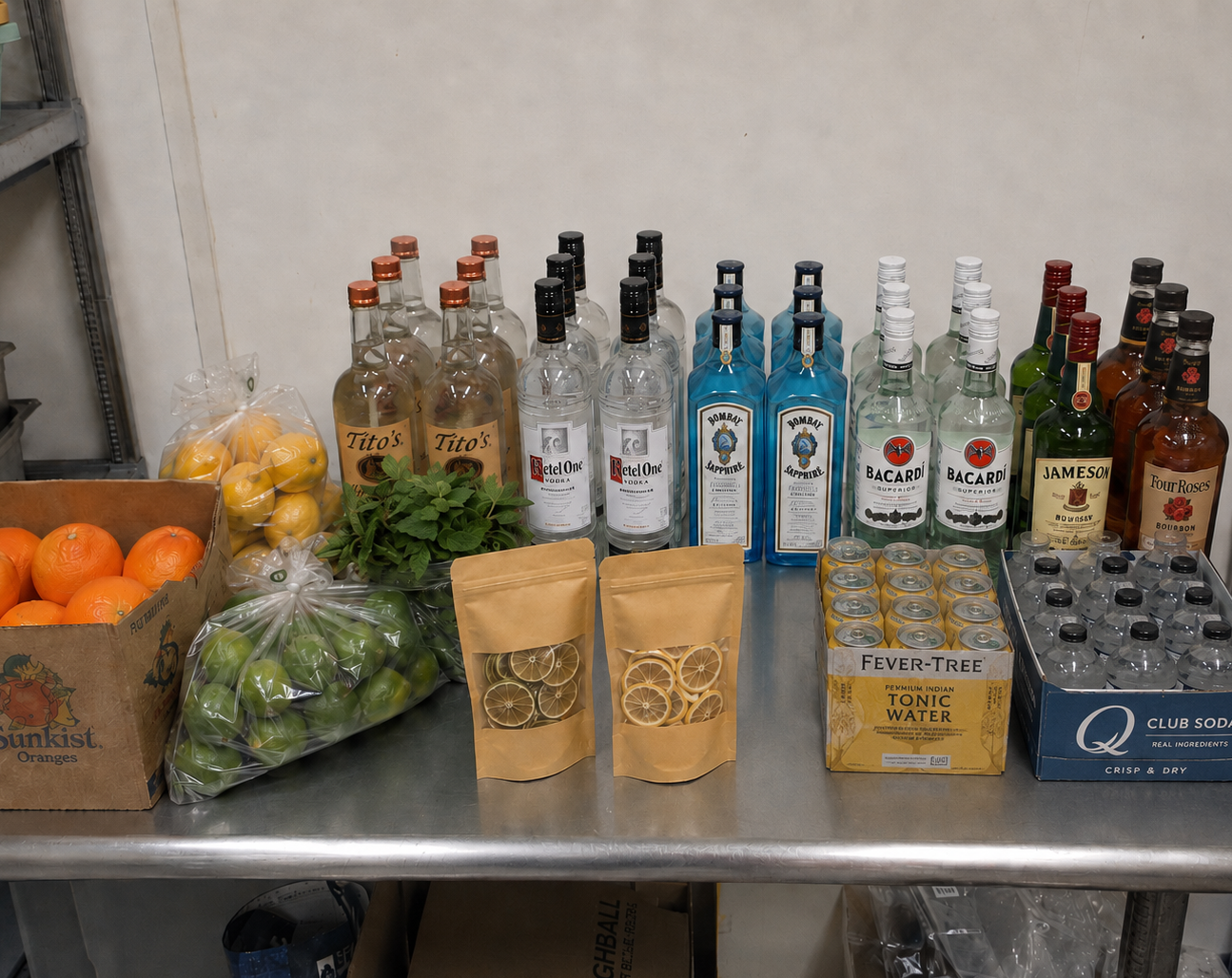
To make approximately 100 cocktails, you would need around six or seven standard liquor bottles, depending on the recipes and pour sizes.
For 50 glasses of wine, you would need approximately 10 bottles.
For the beer and seltzer portion, you would need around 50 individual cans or bottles.
You can adjust this breakdown based on your guests. A cocktail-loving crowd may need more liquor and less wine. A casual cookout may need more beer and fewer specialty drinks.
Signature Cocktails Can Make Planning Easier
Offering two or three signature cocktails is one of the easiest ways to simplify your bar and control costs.
Instead of trying to stock every possible liquor, mixer and garnish, you can focus on a smaller menu that still gives guests a fun experience.
For example, your menu could include:
One vodka cocktail
One tequila or rum cocktail
One signature mocktail
Beer and wine
This gives guests variety without turning your bar into a fully stocked nightclub.
Signature cocktails also speed up service because the bartenders are preparing a limited number of recipes. Faster service means shorter lines and happier guests.
You can also personalize the drinks with names inspired by the couple, guest of honor, event theme or company.
At ShakeUp ATL, this is one of our favorite parts of planning. We love creating drinks that look good, taste good and actually match the personality of the event.
Don’t Forget the Mixers
People often focus so much on the liquor that they forget everything needed to turn it into a cocktail.
Depending on your menu, you may also need:
Juices
Soda
Tonic water
Club soda
Ginger beer or ginger ale
Simple syrup
Sour mix
Fresh lemons and limes
Cocktail garnishes
Water
Ice
Cups
Napkins
Straws
You will usually need more ice than you think.
Ice is used for chilling bottles, building drinks, shaking cocktails and filling guest cups. Running out of ice can slow down the entire bar, even when plenty of alcohol is still available.
Your bartender should help you estimate the correct amount based on the menu, guest count and event length.
Be Realistic About Your Budget
You do not have to offer every type of alcohol to create a great bar experience.
A limited bar can still feel thoughtful and complete.
Some budget-friendly options include:
Beer and Wine Only
This is simple, easy to plan and works well for daytime events, networking mixers and casual celebrations.
Two Signature Cocktails
Choose two drinks made with different base spirits and add beer, wine or a mocktail.
One Featured Cocktail
Serve one specialty cocktail alongside beer, wine and nonalcoholic drinks.
Drink Tickets
Give each guest a set number of drink tickets, then switch to a cash bar or nonalcoholic service after the tickets are used.
The best bar package is not always the one with the most options. It is the one that fits your guests, your event and your budget.
Common Alcohol-Planning Mistakes
Buying Equal Amounts of Everything
Your guests probably won’t drink vodka, gin, tequila, whiskey, rum, beer and wine equally.
Focus on what your crowd is most likely to order.
Forgetting About the Event Timeline
Guests may drink more during cocktail hour and immediately after dinner. Make sure the bar is properly stocked and staffed during the busiest times.
Not Accounting for Nondrinkers
Every guest should have something enjoyable to drink. Offer water, soda and at least one thoughtful mocktail or nonalcoholic option.
Choosing Too Many Complicated Cocktails
Drinks that require several ingredients, muddling or elaborate garnishes can create long lines.
Save the more involved cocktails for smaller events or choose recipes that can be partially prepared ahead of time.
Waiting Until the Last Minute
Alcohol quantities should be finalized after your guest count and drink menu are confirmed. Waiting until the day before the event usually leads to overspending, missing supplies or unnecessary stress.

Should You Buy Extra Alcohol?
It is usually better to have a reasonable buffer than to calculate the exact minimum.
However, that does not mean you need to double your order.
Ask the retailer about its return policy before purchasing. Some stores may allow unopened bottles or cases to be returned, while others may not.
Keep your receipts and avoid opening more bottles than needed during the event.
Your bartender can also help manage the inventory by opening bottles only when necessary.
Venue Rules Matter Too
Before purchasing alcohol, check your venue contract.
Some venues require alcohol to be purchased directly through them. Others allow clients to bring alcohol but require licensed and insured bartenders.
The venue may also request:
A business license
Liquor liability insurance
General liability insurance
A certificate of insurance
Additional insured documentation
Security personnel
Specific service hours
Confirm these details early so there are no surprises close to the event.
Let a Professional Help You Plan
You should not have to guess your way through the bar planning process.
A professional bartending company can help you estimate the alcohol, choose a manageable drink menu and determine how many bartenders are needed.
At ShakeUp ATL, we consider your:
Guest count
Event length
Venue rules
Drink preferences
Signature cocktail recipes
Beer and wine selections
Budget
Event style
From there, we can help create a realistic shopping list and organized service plan.
Ready to Plan Your Event Bar?
The goal is not just to have enough alcohol. The goal is to create a bar experience that feels smooth, fun and well planned from the first drink to the last call.
ShakeUp ATL provides professional mobile bartending, customized cocktail menus, bar supplies and interactive drink experiences throughout Atlanta and surrounding areas.
Whether you’re planning a wedding, birthday party, corporate mixer or private celebration, we’ll help you determine what you need without making the process feel overwhelming.
Let the bar come to you.
Contact ShakeUp ATL today for a customized bar service quote and alcohol estimate.



Comments